Ghassan Kadi’s Three Foundational Pieces on the War on Syria (from 2011),
Introduced and Presented by Tony Seed.
““Many of you can see through the eyes of the media you chose to follow about the crisis in Syria. Many of you believe the over-rated propaganda that hundreds of channels or papers place out there meant to sway public opinion. But to understand the truth of a situation, you must first study the history of the situation. There lays the truth and lies in what is known as a media war. Understanding how Syria rose, and what she is going through right now is the most vital tool to fight with fact, not fiction.” | Three articles by GHASSAN KADI*”
https://tonyseed.wordpress.com/2011/06/22/understand-the-bigger-picture-of-syria-history-with-an-agenda/
Understand the bigger picture of Syria: history with an agenda
 “Many of you can see through the eyes of the media you chose to follow about the crisis in Syria. Many of you believe the over-rated propaganda that hundreds of channels or papers place out there meant to sway public opinion. But to understand the truth of a situation, you must first study the history of the situation. There lays the truth and lies in what is known as a media war. Understanding how Syria rose, and what she is going through right now is the most vital tool to fight with fact, not fiction.” | Three articles by GHASSAN KADI*
Introduction
This is a series of articles published in English from June 2011, published on several pages and pro-Syrian publications and since then collected and published in the book An Epic of Integrity: The Chronicles of the War on Syria (June 2016). The articles were originally written in English to convey the true story of what is happening in Syria to the world. At the time, most Westerners and their media outlets were far from the facts. Arab activists were busy writing articles in Arabic, and the articles that we could write and publish were the first articles written and published by Arab activists in English.
The first three articles reproduced here are founding articles that explain the background of the war and how Syria’s enemies colluded and why they cooperated with each other. It is worth noting that they contain the following important points:
- First: showing the weakening of the anti-Syrian coalition and its ideological fragmentation and the multiplicity of its objectives. This is a great indication that its disintegration and collapse was only a matter of time;
- Second: Clarifying the objective of the plot and determining it by striking the resistance and ensuring Israel’s security; and
- Third, when writing these articles, there were no terrorist organizations on the ground, but the articles had begun to warn about the future role of Sunni fundamentalism and to warn of its love for criminality and bloodshed before the emergence of that trend to the public and before the establishment of the Syrian Front of victory.
It is not surprising that different peoples and factions supported each other to fight Syria. Syria is the thorn in the U.S. drive for domination of the United States, the eyes of Israel, and the backward Wahhabi fundamentalist Islamic Gulf and the Lebanese right that is allied with with the U.S. and Israel. Nor is it surprising that Syria has attracted its supporters in the local, regional and international resistance, has overcome difficulties and is winning.
All in all, the articles published in Ghassan Kadi’s book were written over a period of five years, and reflect the developments as they occurred since 2011. After publishing the book in the language of its original English writing, encouraging readers and their urgent request to translate the articles into Arabic, we decided to translate it and publish it in Arabic with a view not only as a war story, but also to the future. – Intibah Kadi
**Ghassan Kadi, a native of Beirut of Syrian origin, is an analyst of Middle East affairs and the author of An Epic of Integrity: The Chronicles of the War on Syria (June 2016). Visit Intibah and Ghassan Kadi’s website.
The anti-Syrian cocktail
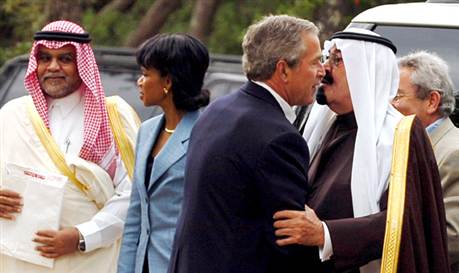
Prince Bandar Bin Sultan is the son of the Saudi crown prince, but he seems to run his political life on the basis of having a state within a state. He is a rogue prince, but with a flavour that suits the American agenda.
Just like America supported the rise of Bin Laden back in the eighties because his rogue nature had an anti Soviet flavour, the USA is now supporting Prince Bandar because of his anti-Iranian flavour.
Bandar is in essence a Sunni fundamentalist from the Wahhabi sub-sect. His sworn enemies are the Shiites for no reason other than sectarian prejudice.
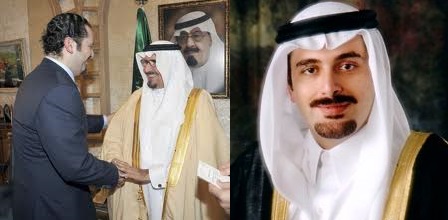
He is terrified by the regional rise of Iran (Shiite state). Many moderates share those views, but Bandar is prepared to go to extremes in fighting the Iranian rise. He found a good ally in Saad Hariri of Lebanon. Saad Hariri accuses Syria of killing his father Rafik Hariri and is a sworn enemy of the Shiite Lebanese Hezbollah.
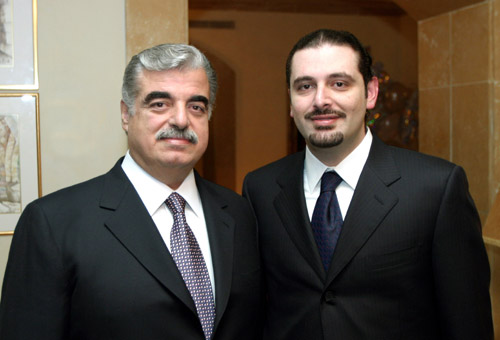
Bandar and his ally Saad see more danger in Hezbollah and Iran than they see in Israel. Syria, being an ally of Iran, becomes then the natural enemy of Bandar and is already the personal enemy of Saad.
It is important to note that the stands of Bandar and Saad are not based on strategic political alliances and/or on principles. Rather, they are based on mere sectarian bias and fanaticism.
Saad in his turn, turns to his home-grown fanatics to do his dirty work. He has been personally responsible for funding and training two ultra fundamentalist Sunni groups in Lebanon; Fateh Al-Islam and the Salafists.
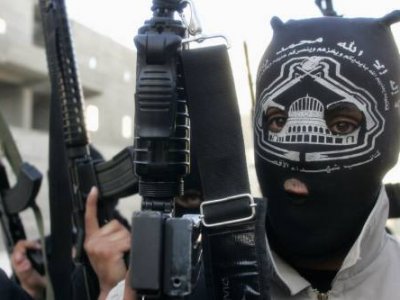
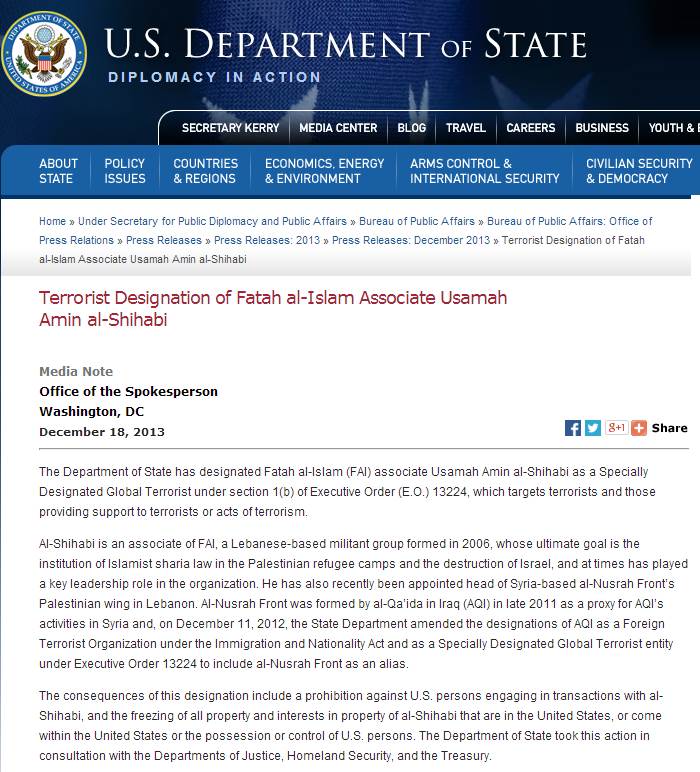
(The United States designates Amin Al-Shihabi as a terrorist organization, but has yet to designated Fateh Al-Islam as a terrorist organization as other nations have done)
The former group (Fateh Al Islam) had to be quelled violently by the Lebanese Army in the Palestinian Al-Bared camp north of Tripoli (Lebanon’s second largest city). The battle was bitter and left the camp in total ruin. Thousands of Palestinian refugees had to be relocated. Ironically, that battle took place in 2007, at a time when the Lebanese government was headed by Fouad Seniora (a Saad Hariri man).
What is more ironic is that the USA supported the Lebanese Army to fight the very group it had helped establish. The Lebanese Army appealed to the US for assistance and America could not be seen in the international arena to refuse this but, at the same time, it was under the blessing of the USA that the Sunni fundamentalist alliance between Bandar Saad and Fateh Al Islam was forged.
Little is known about the fate of the Palestinian Shaker Al Absi, the leader of that group. All that is known about him is that he is on the “wanted” list and at large. However, Dai’i Al Islam Shahhal, the Tripoli-based leader of the Salafists is Lebanese and he gets the full support and cover from Saad Hariri.
The Salafists’ main agenda item is the destruction of Shiite Islam, but they are an Al-Qaeda type organization in every respect possible. Yet, they get the blessing of the USA via the tiered Saad Hariri / prince Bandar alliance.
As hard as it may be to believe, but the USA is in fact supporting a Sunni fundamentalist Al-Qaeda type organization in Lebanon.
Why would the USA do this?, one may ask. The answer is very simple.
The USA ranks its enemies in reference to their threat to Israel; not to the USA itself. So while America’s biggest current enemy is Al-Qaeda, Israel’s biggest current enemy is Hezbollah.
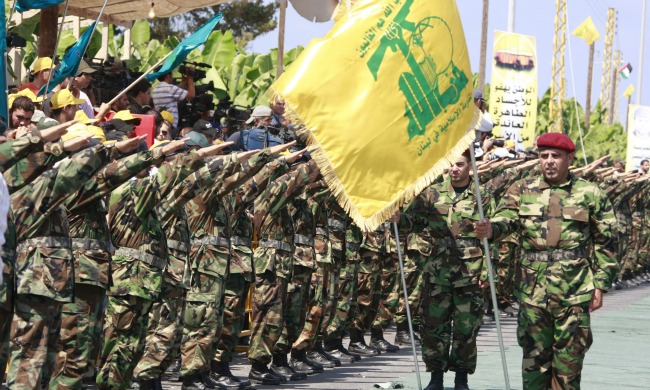
Hezbollah gets its arms from Iran via Syria. Syria and Hezbollah are the natural enemies of Sunni fundamentalists.
If weakening Syria and Hezbollah means having to forge an alliance with Al-Qaeda, then the USA will do it for as long as this serves Israel.
Whilst the USA is fighting against Taliban and Al-Qaeda in Afghanistan, and NATO nations are losing young men and women in this war, the USA is in fact engaged in supporting a subsidiary of Al-Qaeda in Lebanon.
The Prince of Qatar is playing a big role in the anti-Syria alliance. Al-Jazeera (the prince’s pet newsagency) is fuelling the uprising in Syria.
Syria needs reform, and President Basshar embarked on the journey of reform soon after he took office. Admittedly, he did not manage to control the corrupt old guards. That said, Syria has flourished and became a haven of peace, security, and secularism.
Syria however has three groups of enemies. The Israeli American alliance is the natural enemy.
Within Syria, the fundamentalist Sunnis want to see an overthrow of the secular regime. Their slogans are to kill the Alawites (Shiite sub-sect to which president Assad belongs) and to evict the Christians to Lebanon. Those groups found a field day in the Arab uprising. Under the guise of a democratic movement, they are stirring up sectarian divisions and targeting Alawites.
Just outside the Syrian borders in Lebanon, there are many anti-Syrian Lebanese groups. It is as if the freaky USA/Al-Qaeda alliance is not weird enough, in Lebanon, the fundamentalist Sunnis (Salafists) found a good ally in the ultra rightwing Christian Lebanese fundamentalists (Lebanese Forces). What unites them is their hatred towards Syria.
If Assad falls, the USA/Israel alliance hopes to have him replaced by a fragmented and weakened Syria. This is a possibility, but that alliance fails to realize that some Syrians are now perhaps perplexed by what is happening, but once they realize the enormity of the conspiracy, they will unite under Basshar Assad or after his demise. They will not allow fragmentation.
The worst scenario for all involved, including the enemies of Syria, would be if the country falls under the rule of the Sunni fundamentalists. If this happens, Syria will suffer greatly in the short term. But the biggest loser in the short and long term, will be Israel.
Any one who cannot believe that such strange alliances can exist can go to Lebanon or Syria to find out the hard way. Any person or organization supporting the so-called Syrian revolution, believing that this would be tantamount to supporting freedom and democracy, should stop to have a second look. There is much more to this than meets the eye.
June 10, 2011
The anti-Syrian politics
In this closing chapter of the sequel of articles, it must be emphasized that the objective is not to defend Assad, but rather to explain some truths that are related to the recent history that led to this moment in time.
Some comments received reiterated that the focus must be on the future, but we study the past in order to be able to put the benefit of hindsight into practice.
In the not too distant past, Lebanon and Syria were fairly identical in most respects. Lebanon is the mountain region of the Syrian coast. Its state borders moved back and forth just like the borders of any other countries including super powers like France.

Historically, Lebanon housed a higher percentage of Christian population than Syria. Its mountainous terrain turned it into a refuge for Christians who feared religious persecution. Christianity however is not alien to Syria. In Maaloola and Sidnaya near Damascus, ancient Churches continue to make their prayers in Aramaic; the spoken language of Christ. Damascus itself houses the grave of John the Baptist inside its Grand Omayyad Mosque.
When the young Syrian and Lebanese states received their independence from France in the 40s, there was little difference between the countries. When the census was done earlier in 1932, some citizens were caught on the “wrong” side of the borders and families were split as half Lebanese and half Syrians. This included my family. Back then, no one seemed to care much.
The central bank for both states was the “Bank of Syria and Lebanon” and Lebanese currency had that name on its notes until the mid 1960s.
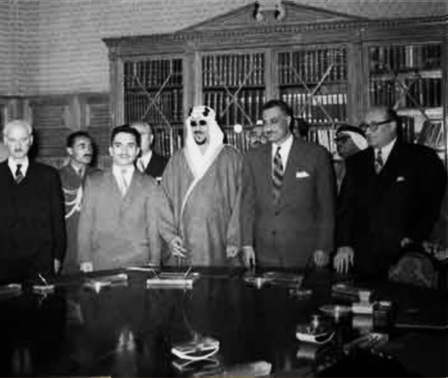
The 1950s were a tumultuous time for Syria. It was a period of political unrest and political assassinations. In 1958, Syria became a part of the United Arab Republic when it united with Egypt under Nasser as president. On the 28th of September 1960, a military coup ended the union with Egypt. That coup was followed by a series of coups and it became almost impossible to keep track of such developments until the Baath party finally took over by a military coup on the 8th of March 1963.
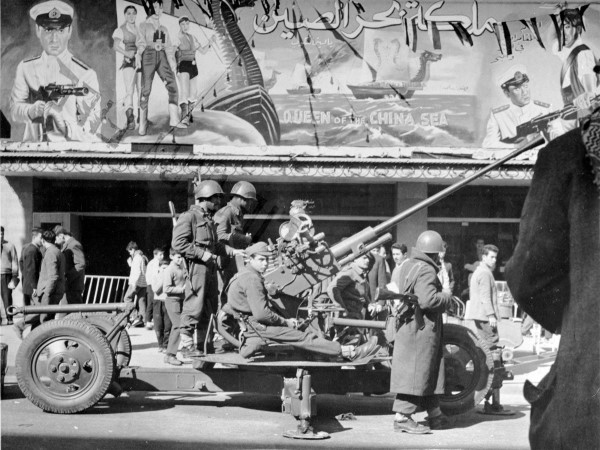
The Baathist coup was followed by more turmoil and inter-party rivalry which did not end until Hafez Al-Assad assumed power after the “Corrective Movement” in 1970.
The turbulent 50’s continued into the 60’s where Syria experienced a very tough time. The political unrest resulted in an exodus of wealth and entrepreneurs. The natural recipient of that exodus was Lebanon. Even without the Syrian influx, Lebanon was having its golden age. The Lebanese civil unrest of the summer of 1958 was soon forgotten and Lebanon became known as Switzerland of the East.
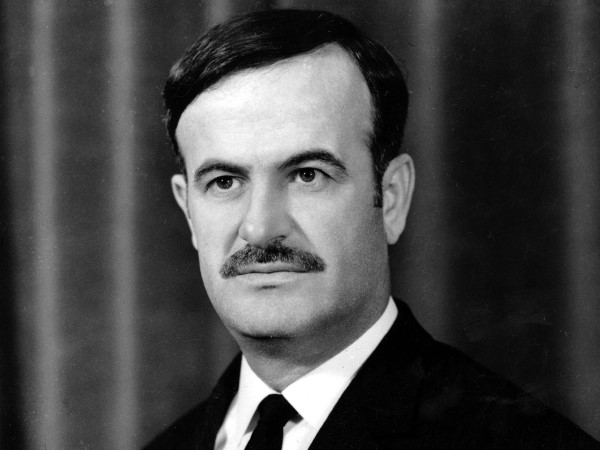
President Hafez Al-Assad
The Syria that Hafez Al-Assad inherited was poor and corrupt. It had little infrastructure, under developed agriculture and industries, and to top it off, it was in a state of war with Israel.
What contributed more to the Syrian/Lebanese schism was that Syria had an autocratic political regime, and Lebanon was a tax haven that had a political system which was very close to a Western style democracy.
As Lebanon was getting richer and more open to the world, Syria was getting poorer and more closed up. Crossing the borders from Lebanon into Syria became similar to crossing the borders from San Diego USA to Tijuana Mexico.
Nation-building was paramount on Assad’s agenda. For this to happen, very strict austerity measures had to be put in place. And here is something that the West cannot understand. To put such austerity measures into action, a leader cannot be democratically elected. Democratically-elected leaders are not able to implement severe measures without losing the next elections. The continuity of strict nation-building projects demands either dictatorship or bipartisanism which is virtually impossible to find in a place where party politics dictate that any thing can be used as a political weapon.
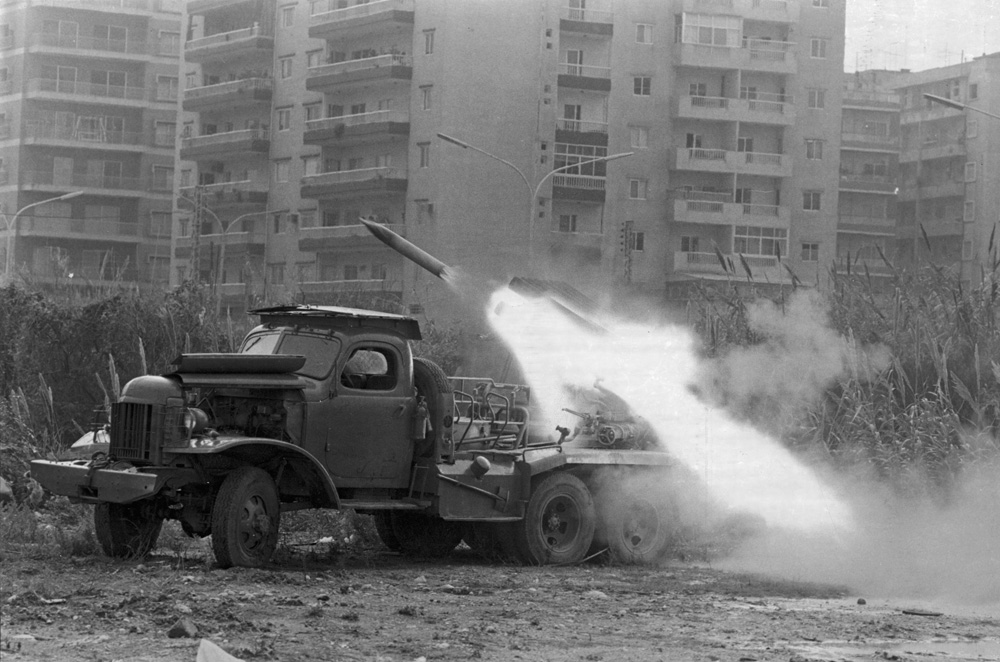
By the mid 70’s, Lebanon’s golden age was coming to an end. The Western style democracy soon turned into anarchy, and the country succumbed into a long and bitter civil war that had a strong sectarian foundation.
In the 70’s, as Lebanon was breaking loose and as its people were adopting the law of militia groups, the Syrians were ruled by an iron fist that did not tolerate any sectarian divisions and any form of political freedom that would mimic the neighboring chaotic Lebanon.
The wheel of fate started to turn the other way, and this time, it was in the favour of Syria.
All the while Lebanese youths were going to get military training in sectarian militia camps and were fed with sectarian prejudice, Syrian youths were conscripted in the national secular army and given lessons in patriotism.
Whilst Lebanese militia groups were kidnapping, maiming, torturing and killing other Lebanese on sectarian grounds, it became illegal in Syria to even ask another citizen about his/her religion with a mandatory jail sentence in place.
The Lebanese citizen grew up believing that he/she can live his/her own way under his/her own law. The Syrian citizen grew up knowing that there is law and order and severe punishments would ensue if those laws are broken.
The Syrian regime gained its dictatorial notoriety by implementing very strict rules of law and order, and whilst the one-party rule meant a continued grab of power by the Baath Party, it also meant that Syria would not slump into a Lebanese-style multi-party anarchy.
The Syrian Intelligence (Moukhabarat) became a very powerful organization. Styled like the KGB, it did not leave any chance for dissent.
In the late 70’s and early 80’s, the Syrian Moslem Brotherhood began to stir anti-Assad passion among the Sunnis. They regarded Assad (an Alawite) as an infidel. They ambushed and killed several top ranking Alawite military personnel and Syria was about to follow the foot steps of Lebanon in its civil war.
Assad crushed the revolt ruthlessly. In an unprecedented move, the Syrian army attacked the brotherhood in a mosque where the rebels thought they would be safe.
Those rebels were not peaceful democracy campaigners. They were an armed bunch of murderers with a fundamentalist Sunni agenda; similar to what is now known as Al-Qaeda.
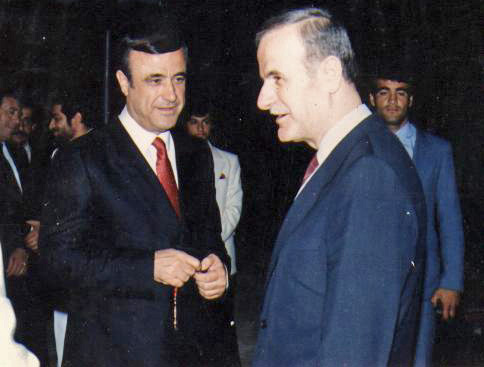
One of the biggest challenges that Hafez Al-Assad had to confront was his home-grown corruption. His own brother, Rafaat Al-Assad, established a state within a state. He was a corrupt officer surrounded by a bunch of thugs and looters. Rafaat was exiled to France where he could not cause any trouble.
Assad managed to rid himself of many of the corrupt officers and officials but he never was able to do this fully. Corruption is a universal “disease’ and Syria is not immune.
Needless to say that the brutality of the Moukhabarat was invariably unjust and many innocent people were incarcerated some were allegedly never seen again.
Nevertheless, when Hafez Al-Assad died in 2000, Syria had been transformed. The country became a safe haven, a secular model, and a politically stable country with a growing economy and a good foundation of an infrastructure.
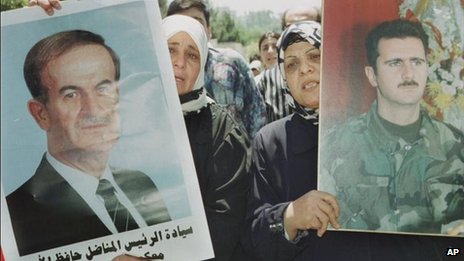
When Basshar Al-Assad took over the presidency, he fast tracked the process of reform. The tough austerity measures of his father’s era had already paid dividend and were eased. Imports were allowed to flow in as the economy was able to afford them. The Internet and Mobile phones became a part of Syrian life. The country prospered as private enterprise regained its position in the thriving economy. And last but not least, some political freedom was allowed. Parties such as the Lebanese-rooted Syrian National Socialist Party and the Communist Party, to name some, were given the freedom to operate. The political freedom that Basshar was not to tolerate was the one that had sectarian agendas and/or the one that would call for armed revolt.
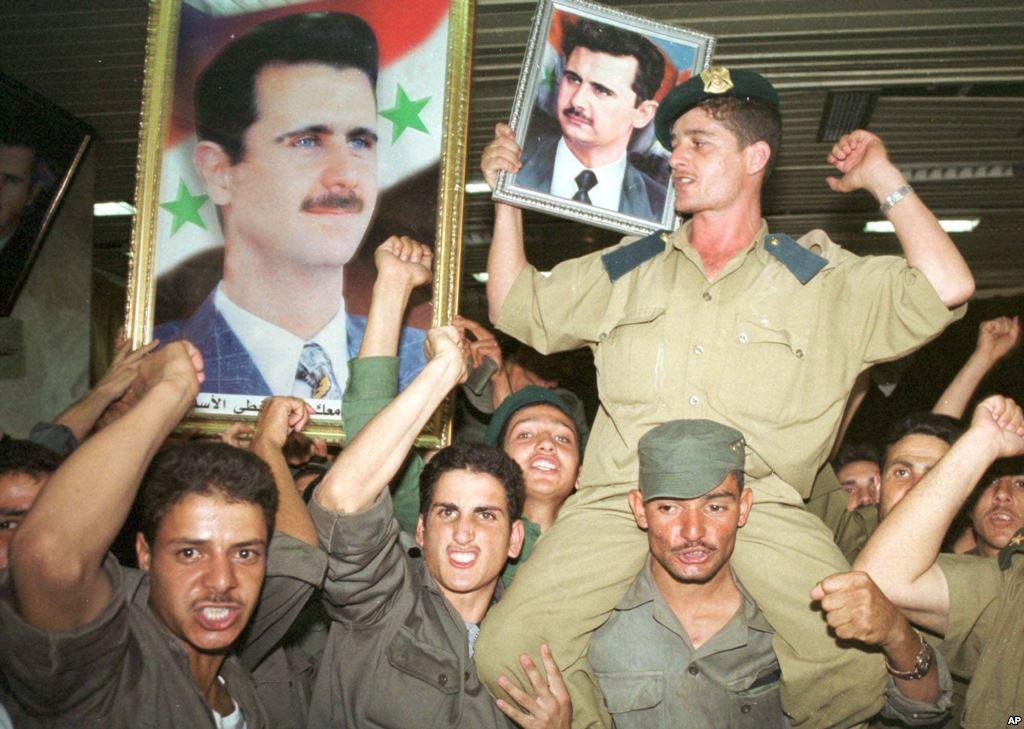
Any person who denies that Basshar Al-Assad had embarked on the journey of reform from the day he took office is either ill-informed, or deliberately twisting the truth.
Ironically, the reforms that the West demands of Assad are already getting introduced one at a time. They cannot be rushed in simply because this is what the USA and France demand today.
If anything, France’s biggest promise to the peoples of Lebanon and Syria was to keep them segregated. General Gouraud made this very clear after his troops savagely massacred the outnumbered and ill-equipped Syrian army led by the gallant Youself Al Azmeh in Maysaloun in 1920. This same general is notoriously renowned for stepping his foot on the tomb of Salladin in Damascus saying “we have returned”. It was France which bombed Damascus and its famous Hamidiyye Souk. For the French FM Alain Juppe to make claims today that France cares about Syria and Syrian people is quite laughable.
Basshar’s biggest failing is that he did not do a house cleaning like his father did. Basshar is surrounded by a huge number of very good men and women working with him to serve Syria. However, there is a handful of bad apples around him that need to be plucked out. He knows well who they are and they should be on his priority list after restoring peace and order in Syria.
With his failings and short-comings, Basshar Al-Assad and the Assad legacy have created a prosperous and stable Syria, introduced many political and economic reforms, and domestically stood up against sectarianism and fundamentalism while on the regional arena stood up single-handedly against the American/Israeli plots. Last but not least, the legacy secured the defeat of Israel in Lebanon.
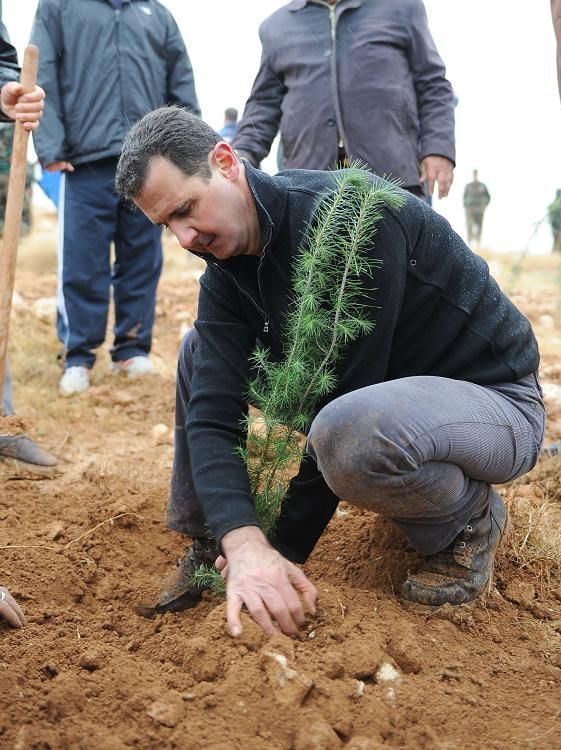
Basshar Al-Assad does not display any of the traits of a unpatriotic ruler who accumulates wealth and lives an opulent life like Mubarak or Bin Ali of Tunisia. Reports from people who know Assad consistently maintain that he is a humble man.
This is also evident in any of his official appearances. He has been able to holiday and move freely around Syria with his family without the need of protection and indeed live a very normal life. It is hard to believe that he is not distressed at what is happening to his country.
Even if one would stretch a very long bow and assume that Assad is indeed personally responsible for all of the recent bloodshed in Syria, any person with good knowledge of Syria would reiterate that any replacement of Assad will very highly likely lead to much more bloodshed. When this arguement was put forward by Mubarak it was indeed an act of scaremongering. The Muslim Brotherhood in Egypt did not have a violent past like its Syrian counterpart.
If Assad goes down, Sunni fundamentalism is likely to replace a balanced secular system, anarchy will replace stability, economic uncertainty will replace growth, and there is no guarantee at all that democracy will ensue.
There is no valid argument for replacing Assad. Those who are making this call are not offering any better alternatives. They are simply letting off steam and seeking vengeance. How can this be better for Syria or the rest of the world? Do the Arabs need a new Iraq? Does America need a new Afghanistan?
June 9, 2011
The anti-Syrian vendetta
The background of the Western stand behind so-called Syrian revolution is hard to understand without a proper understanding of the recent history of the region.
Luckily, we only need to go back to 1982, the year Israel invaded Lebanon and ousted the PLO from Lebanon.
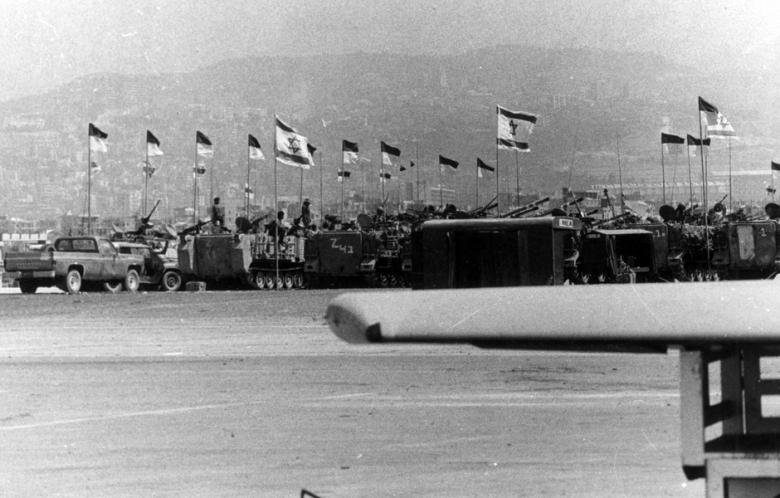
Just prior to the 1982 invasion, Israel had secured its borders with both Egypt and Jordan with peace treaties. The uneasy quiet on the Syrian front was likely to stay that way. Syria is not capable to launch a major conventional attack on Israel. That status quo gave enough security to Israel. The only thorn in Israel’s backside was the presence of the PLO in Lebanon, and in South Lebanon to be more specific.
By ousting the PLO, Israel believed that Lebanon has become a subservient country and that it was going to be able to install a puppet regime, and why would it not believe so? The PLO was driven out, the Lebanese capital was under its control, and the pro-Israeli leader of the Lebanese Forces (Bashir Gemayel) was elected to be president of Lebanon.
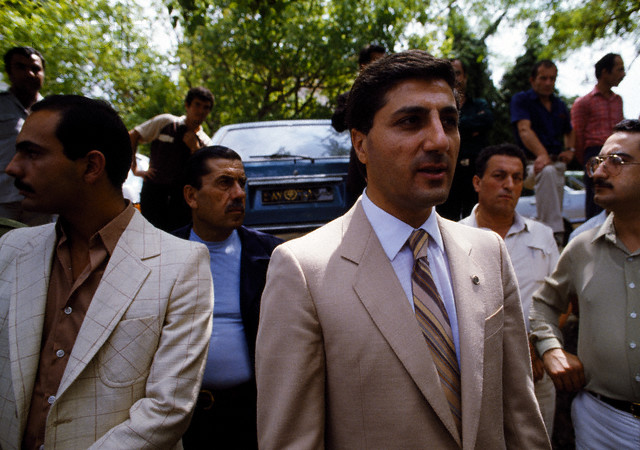
When Gemayel was assassinated by a member of the Syrian National Social Party (a Lebanese political party that promotes the idea of Greater Syria), Israel lost a powerful ally and a power broker. Under the presidency of his brother Amin (who was elected a few days after the assassination of Bashir), the Lebanese government was coerced to enter peace talks with Israel. A peace agreement was reached on the 17th of May 1983 but Amin Gemayel did not ratify it. He was undoubtedly worried to pay for it with his blood.
It looked, however, like it was a question of time before Lebanon and Israel signed a peace agreement.

The Multi-National Force commanders meet to discuss mutual problems of peacekeeping and defence, left to right: BGen Franco Angioni, Italy; Col James M. Mead, United States; BGen Michel Datin, France; and LtCol. John C. Cochrane, Great Britain.
During that period, the Syrian influence on Lebanese politics was reduced to almost nothing despite the continued presence of Syrian forces in the part of Lebanon that remained outside Israel’s control. The presence of Israeli forces in virtually half of Lebanon together with the later presence of American/French/Italian peace-keeping forces in Beirut, not to mention the muscle power of the US sixth fleet and its pride USS New Jersey was more than overwhelming. The very thought of resistance was unfathomable.
The situation was very desperate and virtually hopeless. How could Lebanon, the small fragmented country, rise up and defeat the many enemies within and without?
And then, from the ashes rose the Lebanese Resistance. With the support and strategic genius and tenacity of Hafez Al-Assad, the Lebanese Resistance was able to score a multitude of painful blows to the Western alliance.
To make a long story short, this culminated in an unprecedented defeat of Israel. For the first time since its infamous inception, Israel had to retreat from Lebanon. Never before had Israel given up Arab land without trading it for something of value. Israel called its retreat a strategic withdrawal. It was in fact a very humiliating defeat. This defeat of Israel was the biggest victory of Syria and Lebanon and the crown jewel of Hafez Al-Assad’s political career and greatest achievement. He lived enough to see this victory and passed away a few weeks later.
Israel’s gamble in Lebanon failed abysmally. The PLO was replaced by a much more potent and much better organized Hezbollah, and Syria was back in Lebanon in greater force.
It was probably at that time that Israel and the USA decided to escalate their plots against Syria. The young and little-experienced Basshar Al-Assad was seen as an easier target than his seasoned father. Basshar was however not scared of reform like his father was. He opened up Syria to the world and made huge steps towards political and economic reform. No doubt, more needed to be done. Basshar needed to clean up his camp and get rid of some serious cronies. This however is not the topic of this article. That said, the West needs to realize that what it perceives as a perfect political system ie democracy, does not work everywhere; needless to say that America’s biggest allies and friends in the Middle East are dictators.
When Bush was elected, he had around him the infamous circle of Neo Conservatives. These were a group of pro-Zionist fanatics. Perle, Wolfewitz and Co had one thing and one thing only in mind; to use the tenure of Bush to buy an everlasting peace for Israel.
They had their eye on their strategic enemy; Syria. Attacking Syria however was a difficult concept to sell to the world. They had to come up with a smarter plan. They had to find an enemy that the world loves to hate. They found the perfect one and the perfect excuse.
September 11 gave the infamous Bush alliance a good excuse to justify escalating the rhetoric against Saddam. Furthermore, in Iraq, the alliance found a good lure for oil-thirsty hyenas. The Neo-Cons rounded up the fanatics and Cheney rounded up the scavengers. The war against Iraq became history.
Unlike what many people think. The invasion of Iraq was not about petrol. Petrol was only the lubricant. America invaded Iraq to protect Israel.
But how does invading Iraq protect Israel even though Iraq and Israel do not share any borders?
Destabilizing Iraq and removing the threat of Saddam’s scuds was seen as good enough, but there was much more on America’s mind.
America was planning to use Iraq as a stepping stone to attack Syria and Iran.
In fact, soon after Bush’s arrogant declaration that his mission in Iraq has been accomplished, America started to accuse Syria of trouble in the border region of Iraq; just as planned. America was trying to show the world that it could not control Iraq properly unless it controlled Syria. The same was planned for Iran.
In its arrogance, the USA believed that it was mighty enough to attack and occupy Iraq, Syria and Iran.
But just like Israel got bogged down in Lebanon a decade earlier, the USA soon realized that controlling Iraq was not a possibility. Instead of turning against Syria, the USA realized that it was already in a very deep mess that it is still trying to get out of.
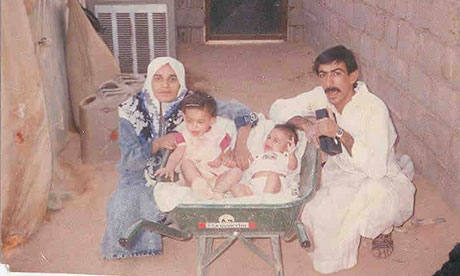
Syria took over one million Iraqi refugees and in doing so, it inadvertently helped the resilience of Iraq. But even without this help, the USA and Israel became increasingly at disease with Syria and its growing strength in the area, especially that it signed a strategic alliance with Iran.
The Assad legacy has outsmarted the American Israeli alliance twice by then. Hezbollah has grown much stronger and its missiles reached deep into Israeli territory in 2006. Never more before did Israel and the USA want to see Assad fall.
Israel and the US are both aware that if Basshar Assad gets toppled he will most likely be replaced by Sunni fundamentalists. As a matter of fact, the USA has been sponsoring the Lebanese-based Sunni fundamentalists (Salafists) for some years. The USA and Israel are prepared to take this risk and much prefer an Al-Qaeda type regime in Syria to that of Assad.
At the end of the day, America will fight the Arab and Moslem worlds, create enemies for itself, send itself broke, bend over and backwards, just to support that illegitimate state of piracy that calls itself Israel.
The Western stand behind the uprising in Syria is not one that is aimed for reform as it alleges. America does not give a hoot about political freedom in Syria. America and Israel have a score to settle with the Assad legacy and they are capitalizing on the Arab revolt. Helped by their Saudi cronies, they are finding new recruits; the Prince of Qatar.
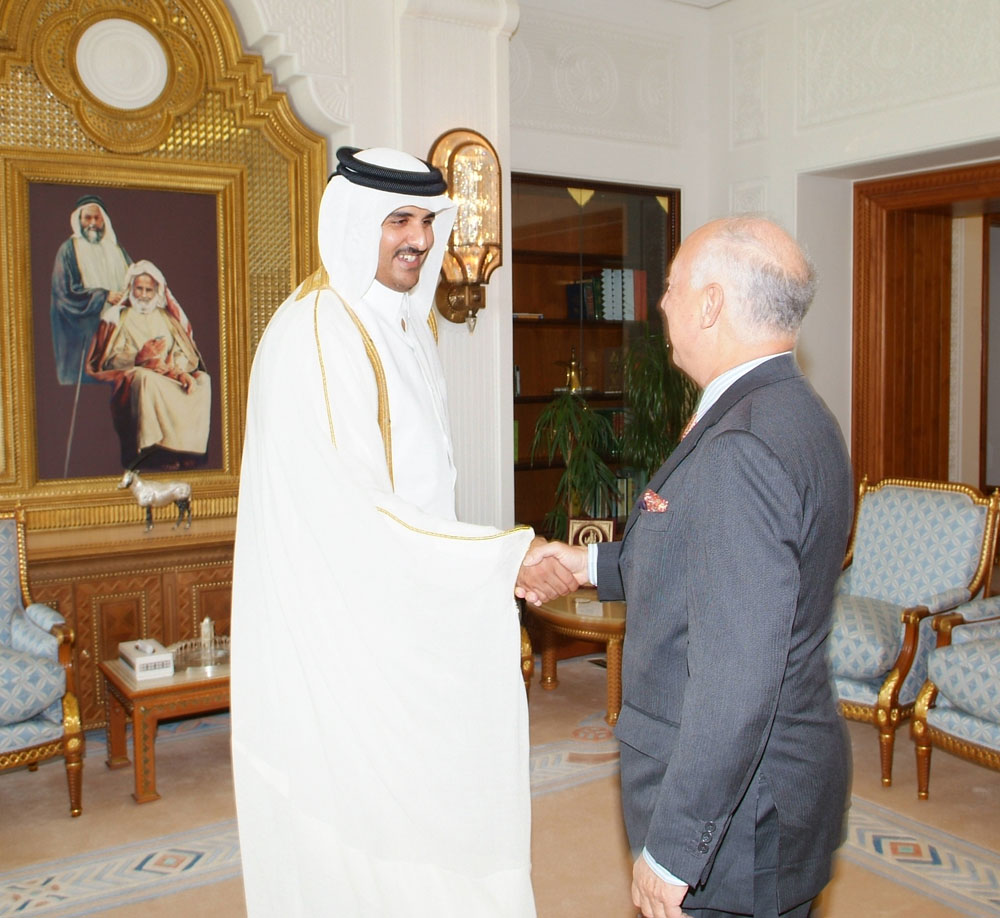
H.H. Sheikh Tameem Bin Hamad Al Thani, Crown Prince of Qatar (left) shaking hands with H.E. Amb. Alessandro Minuto Rizzo, Deputy Secretary General of NATO
The Prince of Qatar is another regional dictator who is a good friend of both the USA and Israel. He hosted on Qatari soil the headquarters for the alliance of the infamous invasion of Iraq.
Al-Jazeera, his pet newsagency is using all its influence to fuel violence in Syria. For the Qatari Prince to think that his country is immune to an uprising similar to that in Bahrain is laughable to say the least.
To America and Israel, this is the time to even up the scores with Basshar Al Assad. To Basshar, it is a great moment of reckoning.
Source: From the blog site “Intibah Wakeup”


